AI Is Not the Guest Experience. It's the Thing That Protects It.

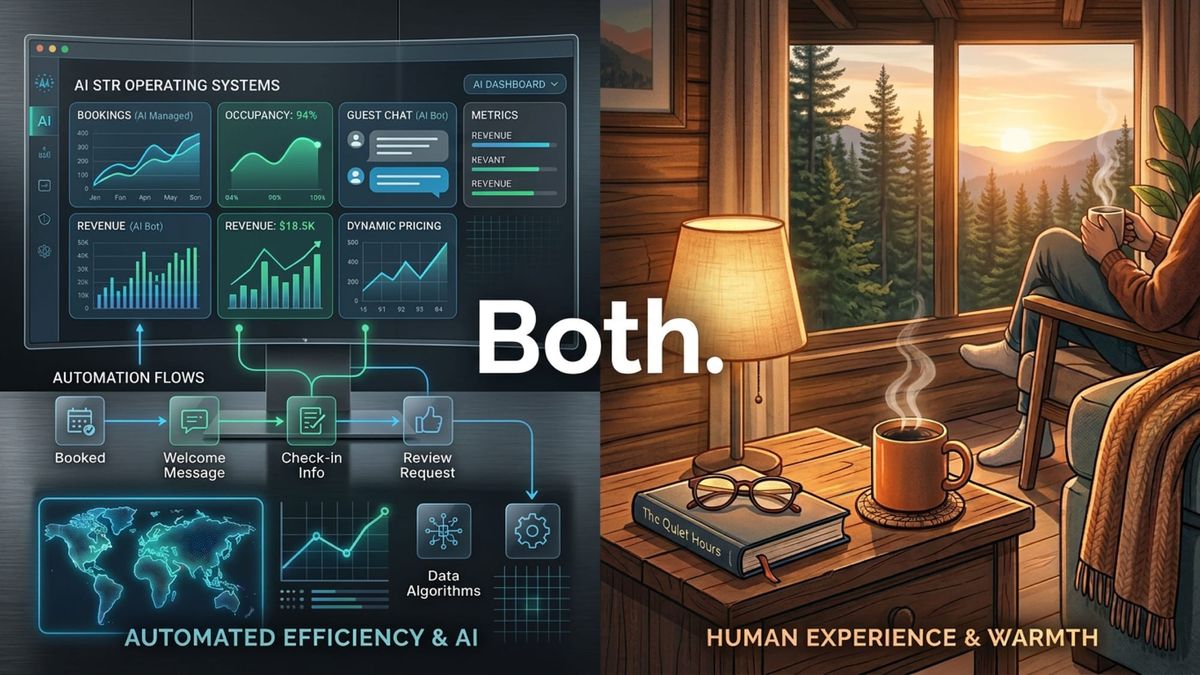
Look, there's a conversation happening right now in the short-term rental industry that sounds like progress but might actually be a trap.
It goes something like this. Automate your pricing. Automate your messaging. Automate your reviews, your cleaning schedules, your guest communication. Use AI to run your business while you sleep. Scale without adding headcount. Optimize every system until the whole operation runs itself.
But really? A lot of that is useful. Some of it is genuinely good advice. I'm not here to tell you AI is bad or that you shouldn't use it. That's not the argument.
Here's what I believe. Somewhere in that conversation, a line is getting crossed that nobody's talking about. The line between using AI to run your operation and using AI to replace your judgment. Between automating the back end so you can focus on what matters, and automating so aggressively that what matters gets automated right along with everything else.
That line matters more than most hosts realize. And right now the industry's blowing right past it.
What AI Is Actually Good At
Let's give credit where it's due. AI's genuinely good at processing information faster than any human can. It's good at pattern recognition. It's good at consistency, doing the same thing the same way every single time without fatigue, without distraction, without having a bad day. It handles volume. It handles the operational layer of your business better than you can handle it manually.
The host managing multiple properties who uses AI for dynamic pricing, cleaning coordination, and check-in messaging is making a smart call. They're getting time back. They're getting mental bandwidth back. That's the tool doing exactly what a tool is supposed to do.
But here's the question nobody's asking after that. What are you doing with the time you got back? Because that's where the real conversation stops. Every podcast, every blog post, every conference talk ends at the efficiency gain and never asks what the efficiency is actually for.
That's the part we need to talk about.
What AI Is Not Good At
Here's what AI can't do. And I want you to really sit with this because it's the whole point.
AI can't feel the difference between a guest who needs warmth and a guest who needs space. It can't read a property and understand what a family of five actually needs when they arrive exhausted from a twelve-hour drive. It can't produce the kind of judgment that comes from genuinely caring whether someone's stay was what they needed it to be.
It can't walk through your bedroom and know that the pillow arrangement is going to create friction for a tired guest at eleven o'clock at night. It can't stand in your kitchen and understand that the beautiful styling killed every usable inch of prep surface. It can't sit in your living room and feel that the furniture arrangement is pushing people apart instead of pulling them together.
Those are human judgments. They require presence. They require experience. They require empathy. And they're exactly the judgments that determine whether a guest leaves your property feeling restored or just accommodated.
The guest experience isn't a data problem. It's a design problem. And design, at the level that actually moves the needle, requires a human being who gives a damn.
The Trap the Industry Is Walking Into
Here's what worries me. And I mean this.
The STR industry's already deep in a commoditization problem. Properties look the same. Listings read the same. The race to scale has produced a market full of properties that are competently managed and experientially forgettable. Guests are struggling to tell the difference between one property and another because the differences have been optimized away.
Now layer aggressive AI adoption on top of that. Automated pricing that mirrors the market. Automated messaging that sounds like every other automated message in every other inbox. Automated reviews in the same language every other automated review uses. Efficient. Consistent. Completely indistinguishable from the property down the street.
You haven't built a competitive advantage. You've built a very efficient commodity. And that's not a win. That's just losing more cleanly.
The guest experience, the part that actually creates loyalty, repeat bookings, five-star reviews, and word of mouth, that part can't be automated. It can only be designed. And it can only be delivered by a host who's made it the priority. AI can't make that call for you. That's a human decision. It always will be.
The Right Question to Ask
I want to give you a reframe. Instead of asking what can I automate, start asking what does automation make possible.
Those are different questions. They produce very different outcomes.
What can I automate leads you toward replacing human touchpoints with automated ones until the operation is lean and the guest experience is hollow. It feels productive. It looks efficient. It's actually just a faster way to become forgettable.
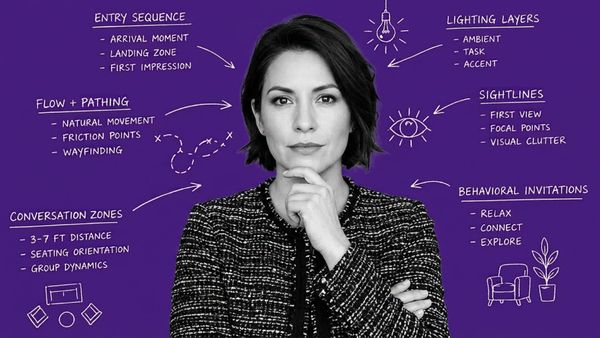
What does automation make possible leads you somewhere better. It leads you to a business where the operational noise is handled and you've got real capacity to focus on the thing that actually determines whether you win or lose. The guest experience. The physical environment. The intentional design of every zone of every property. The human judgment about what a guest actually needs and whether your space is capable of delivering it.
That's what AI should be buying you. Time and capacity to be more human, not less. If it's doing anything else, you're using it wrong.
What This Looks Like in Practice
Let me get specific because vague inspiration doesn't change behavior.
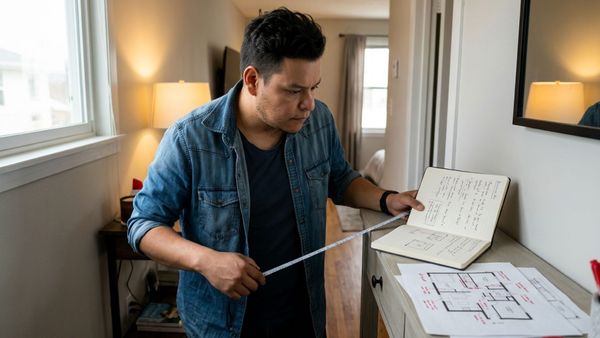
If AI's handling your pricing and saving you two hours a week, those two hours go toward walking your property with fresh eyes and finding the friction your guests are experiencing that you've stopped being able to see. You've been in that space too long. You can't see it anymore. Walk it like a guest.
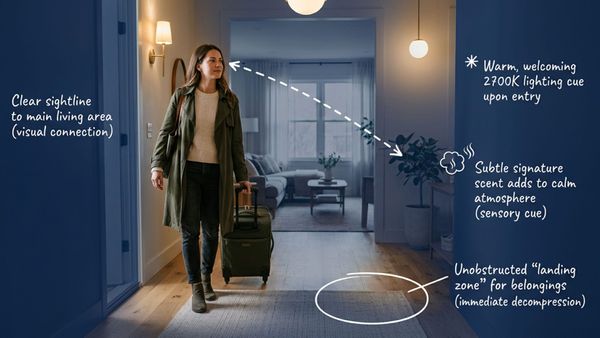
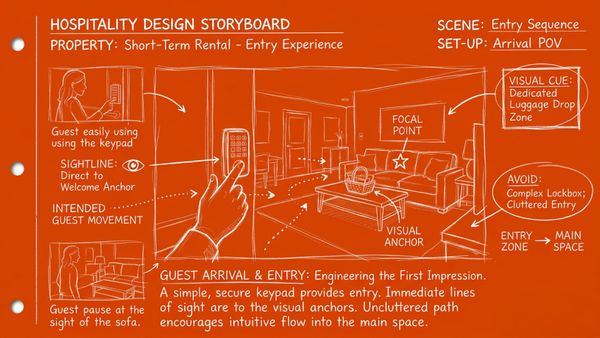
If AI's handling your guest messaging and saving you an hour a day, that hour goes toward thinking hard about what the arrival experience actually feels like for someone who's never been to your property before. What do they see first? What do they feel first? What question do they have that you haven't answered yet?
If AI's coordinating your cleaning team and saving you the mental load of that scheduling, redirect that mental load toward whether your cleaning team actually understands what the guest experience requires. Not just what the property requires. Those are two different briefs and most hosts have only written one of them.
Every efficiency AI creates is only valuable if it gets reinvested into the human layer. The layer AI can't touch. The layer that determines everything.
A Simple Reminder
This isn't complicated. It's a reminder.
AI's a tool. Tools are for building things. The question is always what you're building.
In the STR business, what you're building is an experience. A physical environment that a real human being is going to arrive at tired or excited or stressed or hopeful, spend several days inside of, and leave either restored or just accommodated. That outcome isn't determined by your pricing algorithm or your messaging templates or your scheduling software. It's determined by the decisions you made about that space before the guest ever arrived.
Those decisions require human judgment. They require you to think like a guest, feel the friction in your own property, and ask whether every design choice serves the person who's going to live in it or just the photograph that markets it.
AI wasn't built for that. It was built to handle the operational layer so you have capacity for the human layer.
Use it for that. Protect the human layer like it's the most valuable thing in your business.
Because it is.
The guest doesn't remember your pricing strategy. They don't remember your automated check-in message. They remember how the stay felt. And how the stay felt is entirely up to you.
Keep it that way.
Eric Bryan Gonzales is the founder of Staygineer and the Experience Architect behind Asturian Media LLC. He helps STR hosts design guest experiences that are intentional, human, and impossible to commoditize.